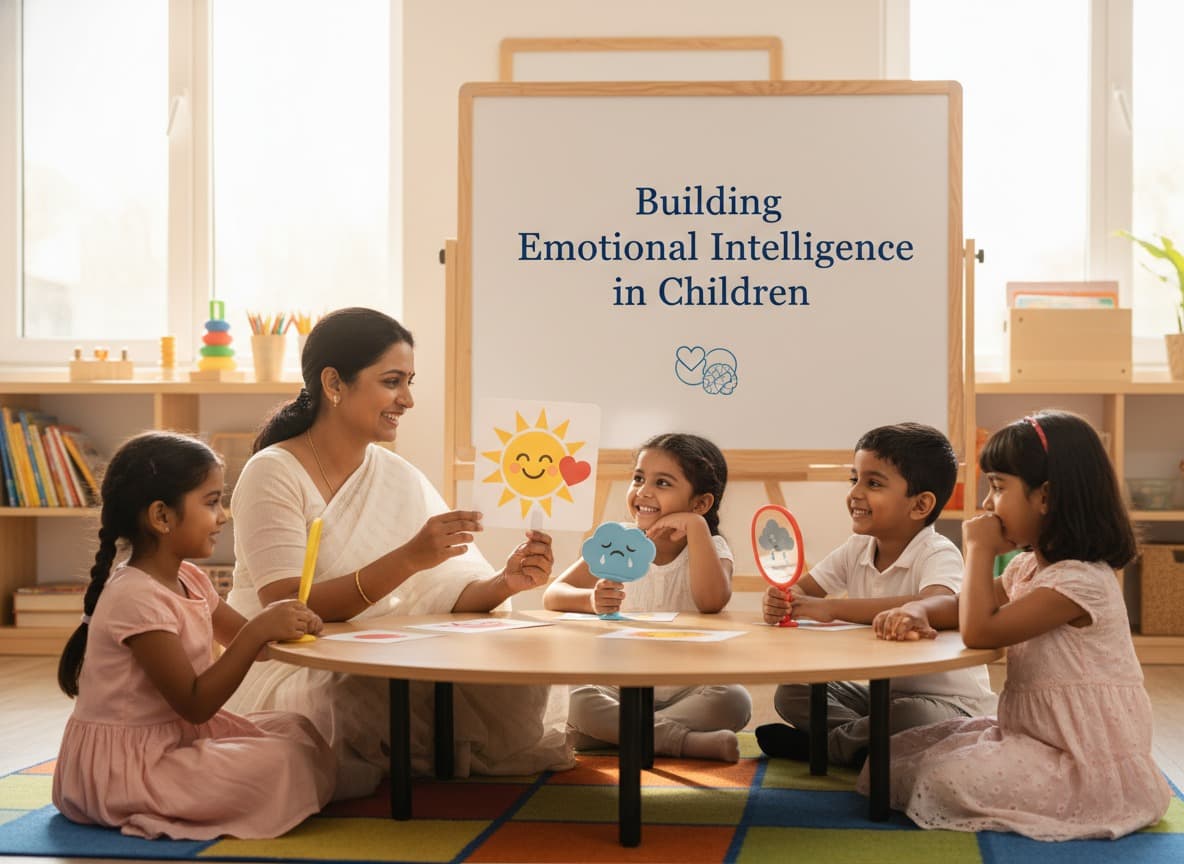
Building Emotional Intelligence in Children
Learn practical strategies to help children develop emotional awareness and regulation skills through interactive activities and mindful practices.
Building Emotional Intelligence in Children
Emotional intelligence is a crucial skill that helps children understand and manage their emotions effectively. In this comprehensive guide, we explore practical strategies that parents and educators can use to foster emotional awareness in children.
Why Emotional Intelligence Matters
Children with strong emotional intelligence are better equipped to:
Key Strategies for Development
1. Emotion Naming and Recognition
Help children identify and name their emotions using:
2. Modeling Healthy Behavior
Children learn by watching adults. Demonstrate:
3. Creating Safe Spaces
Establish environments where children feel:
4. Mindfulness and Self-Regulation
Introduce age-appropriate practices:
5. Problem-Solving Skills
Teach children to:
6. Empathy Building Activities
Use various methods to develop empathy:
Practical Implementation Tips
At Home
In School
Measuring Progress
Look for these positive changes:
Conclusion
Building emotional intelligence is a gradual process that requires patience, consistency, and understanding. By implementing these strategies consistently, we can help children develop the emotional intelligence they need to navigate life's challenges successfully and build meaningful relationships throughout their lives.
Remember, every child is unique, and what works for one may need adjustment for another. The key is to remain flexible, patient, and supportive throughout their emotional development journey.